Trades guidePlumbing service
Leak detection: finding a hidden leak without ripping up the floor
Leak detection finds a hidden water leak (under a floor, in a wall or in a heating circuit) using acoustic, thermal and tracer methods, so the repair is targeted rather than destructive. The signs are unexplained damp, a dropping boiler pressure or a rising water bill. We read your enquiry and reply by email; we do not pass your enquiry to a trade.
Need this done? Tell us the job and your postcode and you can send us an enquiry and we will reply by email. Check the accreditation of any trade before work starts. Free for homeowners.
On this page
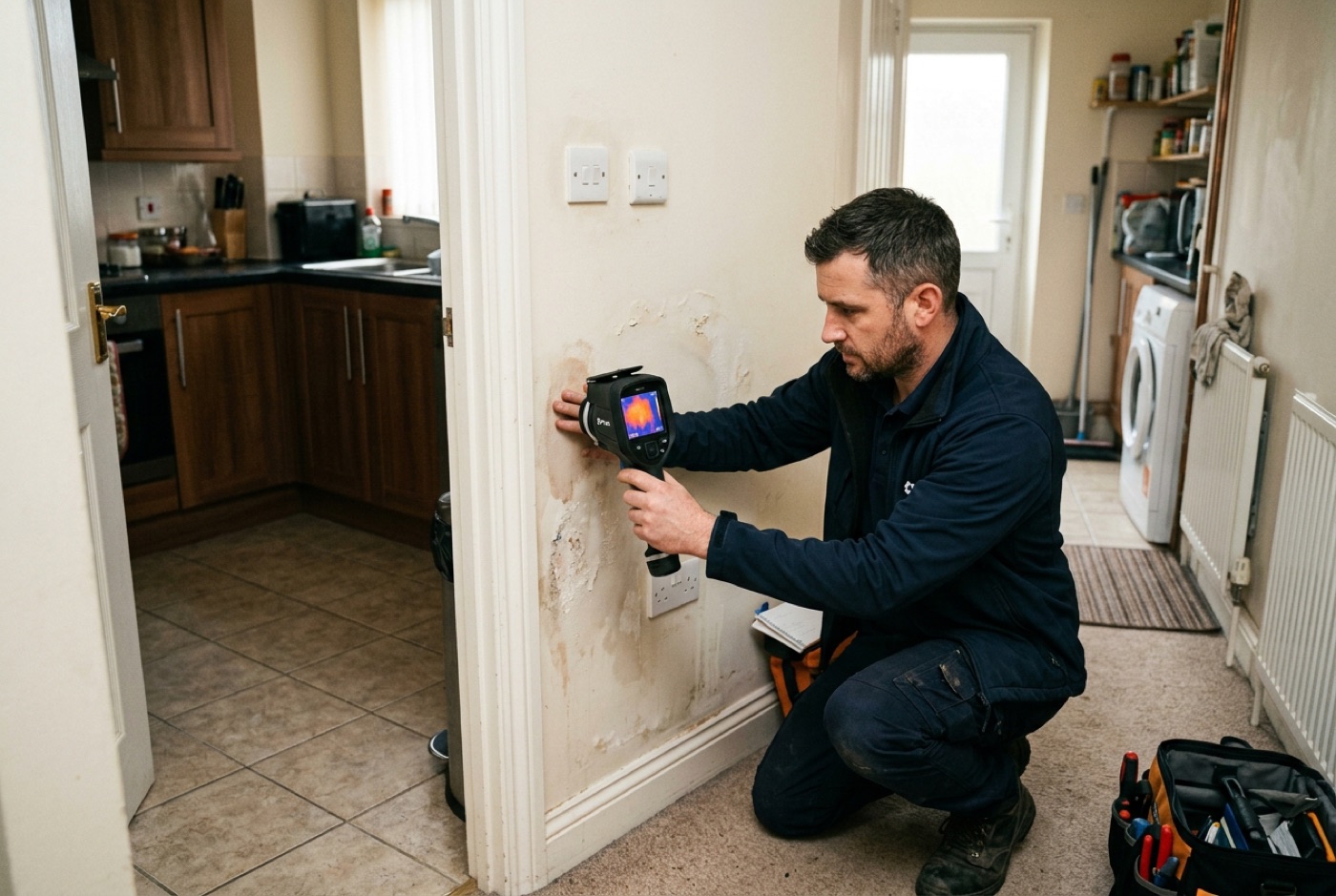
How professional leak detection works
A specialist uses non-destructive methods first: acoustic listening equipment, thermal imaging, moisture meters and tracer gas or dye. The aim is to pinpoint the leak so the repair opens up the smallest possible area, rather than lifting a whole floor on guesswork.
Once located, the specialist either repairs it or hands a precise location to your plumber. Many home insurers cover "trace and access", so keep the report for a claim.
What it costs
- Leak detection survey
- Get a quote Non-destructive methods to pinpoint the leak before any opening up.
- Trace and access
- Often insured Many home insurance policies cover the cost of finding and accessing a hidden leak. Check yours.
How to choose a trade
- Use a specialist with non-destructive detection equipment, not a plumber who only opens up to look.
- Ask for a written report with the leak location, which supports a "trace and access" insurance claim.
- For any gas-related leak, the engineer must be Gas Safe registered.
Frequently asked questions
How do you find a leak without damaging the house?
A leak detection specialist uses non-destructive methods first: acoustic listening gear, thermal imaging, moisture meters and tracer gas or dye. These pinpoint the leak so the repair opens the smallest possible area, instead of lifting a whole floor on guesswork. It is faster and far less destructive.
Does insurance cover leak detection?
Often, yes. Many home insurance policies include "trace and access", which covers the cost of finding and getting to a hidden leak. Keep the specialist written report with the leak location, as your insurer will usually want it to process the claim.
What are the signs of a hidden water leak?
Unexplained damp patches, boiler pressure dropping with no visible cause, a water bill rising with no change in use, a warm patch on the floor over a heating pipe, or the sound of running water when nothing is on. Any of these is worth a leak detection survey.
Sources

Editor, VettedHome
Adam leads VettedHome's editorial coverage of UK home services. He is the founder and managing director of Muswell Rose, the commercial strategy and modern systems business behind a portfolio of UK information sites, and he researches and writes the plain-English guides that help homeowners choose between installers and trades, drawing on the standards set by the relevant bodies for each job, such as Gas Safe Register, NICEIC, MCS, TrustMark and the Property Care Association. He is clear about what to check before any work starts.
Last updated: