Trades guidePlumbing service
Drain unblocking: clearing a blocked drain and what it should cost
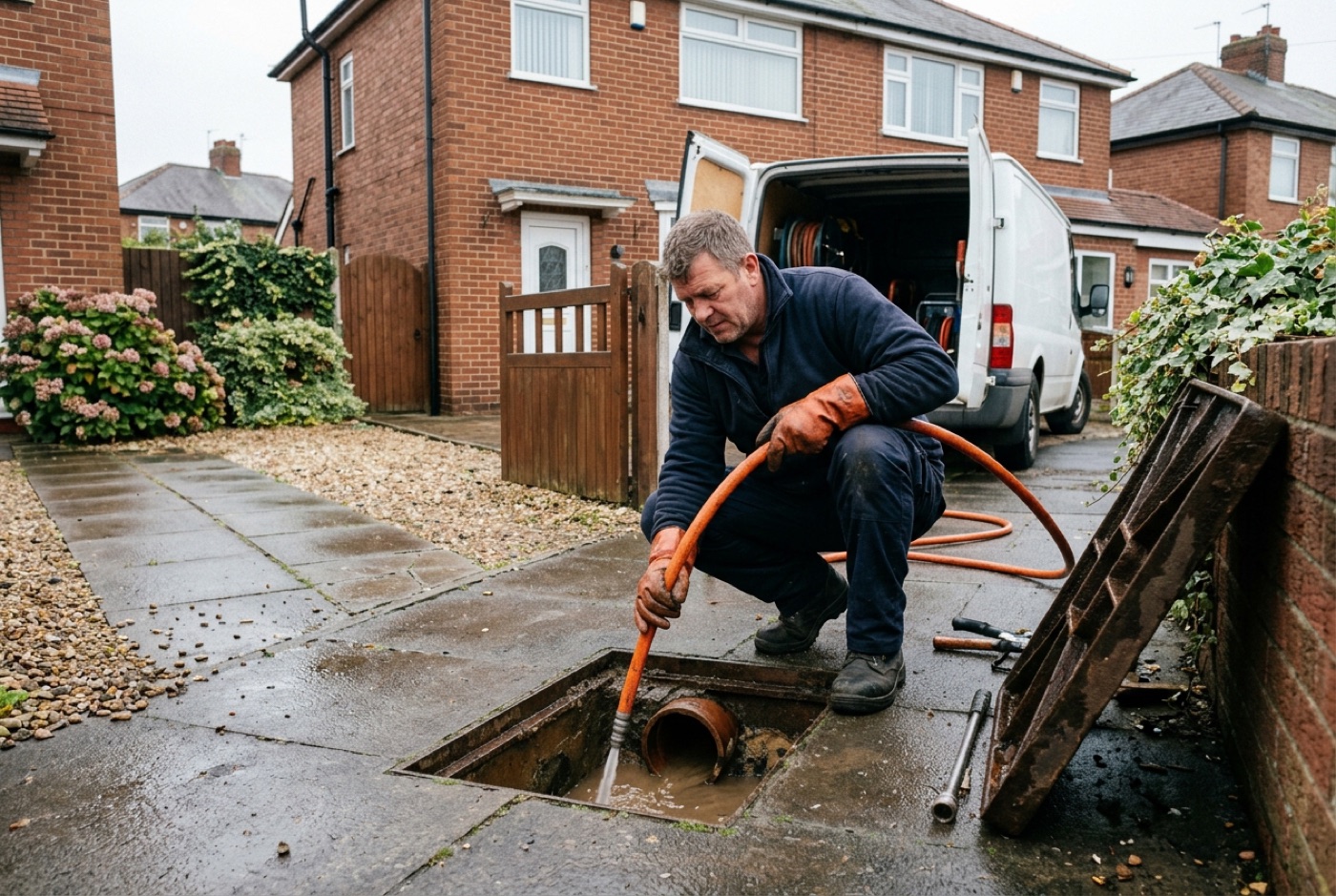
Drain unblocking clears a blocked drain by rodding, high-pressure water jetting or, for a recurring blockage, a CCTV survey to find the cause. The signs are slow drainage, gurgling and bad smells. Some shared and lateral drains are the water company responsibility, not yours. We read your enquiry and reply by email; we do not pass your enquiry to a trade.
Need this done? Tell us the job and your postcode and you can send us an enquiry and we will reply by email. Check the accreditation of any trade before work starts. Free for homeowners.
On this page
Signs of a blocked drain
- Water draining slowly from a sink, bath or toilet.
- Gurgling sounds from plugholes or the toilet.
- Bad smells from drains or gullies outside.
- Waste water backing up into the lowest fittings.
How a drain is cleared
A specialist starts with rodding or high-pressure water jetting to clear the blockage. For a drain that blocks repeatedly, a CCTV drain survey finds the underlying cause (a collapse, root ingress or a displaced joint) so the right repair is done once, rather than paying for a clear-out every few months.
Who is responsible for which drain
You are usually responsible for the drains within your property boundary. Shared and lateral drains beyond it are often the responsibility of your water company, which may clear a blockage on a public sewer at no cost to you. A good specialist tells you which side of the line your blockage is on before charging.
What it costs
- Drain unblocking (rodding or jetting)
- Get a quote Depends on the access and the severity of the blockage.
- CCTV drain survey
- Get a quote Worth it for a recurring blockage, to find and fix the cause once.
- Public sewer blockages
- May be free Your water company may clear a blockage on a shared or public sewer at no cost. Check first.
How to choose a trade
- Ask the specialist to confirm whether the blockage is on your private drain or a public sewer before charging.
- For a recurring blockage, ask for a CCTV survey so the cause is fixed once, not cleared repeatedly.
- Get a written quote before jetting or excavation, and avoid open-ended day rates.
Frequently asked questions
How is a blocked drain cleared?
Usually by rodding or high-pressure water jetting. For a drain that keeps blocking, a CCTV survey finds the underlying cause, such as a collapse or root ingress, so the right repair is done once. That is cheaper over time than paying for a clear-out every few months.
Do I have to pay to unblock a shared drain?
Not always. You are responsible for drains within your boundary, but shared and lateral drains beyond it are often your water company responsibility, and they may clear a public-sewer blockage free. A good specialist confirms which side of the line your blockage is on before charging you.
When is a CCTV drain survey worth it?
When a drain blocks repeatedly, when you are buying a property, or after a blockage that cleared but might recur. The camera finds collapses, root ingress and displaced joints, so the repair targets the real cause rather than just clearing the symptom again.
Sources

Editor, VettedHome
Adam leads VettedHome's editorial coverage of UK home services. He is the founder and managing director of Muswell Rose, the commercial strategy and modern systems business behind a portfolio of UK information sites, and he researches and writes the plain-English guides that help homeowners choose between installers and trades, drawing on the standards set by the relevant bodies for each job, such as Gas Safe Register, NICEIC, MCS, TrustMark and the Property Care Association. He is clear about what to check before any work starts.
Last updated: