Trades guideElectrical service
Emergency electrician: when you need one and what to try first
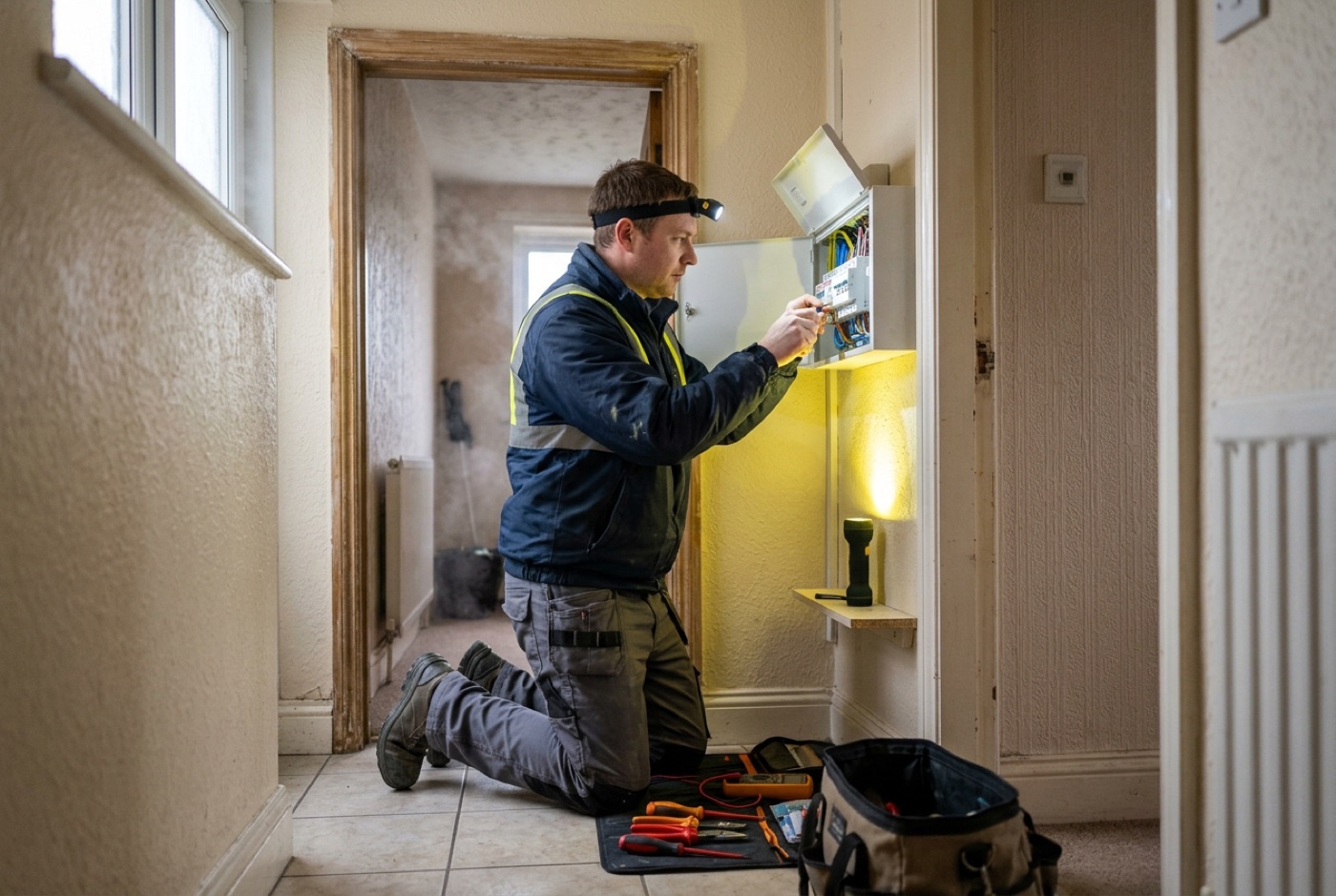
An emergency electrician handles a power fault that will not reset, burning smells, sparking or exposed live wiring. Some "emergencies" (a single tripped RCD) you can safely reset yourself, saving an out-of-hours fee. For anything involving heat, smoke or exposed conductors, isolate at the consumer unit and call a registered electrician.
Need this done? Tell us the job and your postcode and you can send us an enquiry and we will reply by email. Check the accreditation of any trade before work starts. Free for homeowners.
On this page
When it is a genuine emergency
- A burning smell, smoke or scorch marks from a socket or the consumer unit.
- Sparking, buzzing or visibly damaged or exposed wiring.
- A total loss of power with a breaker that will not reset.
- Electric shocks from taps, appliances or fittings.
- Water reaching electrical fittings after a leak or flood.
Safe checks to try first
- If a single RCD has tripped, unplug everything on that circuit, reset it, then plug appliances back in one at a time to find the faulty one.
- Check whether the whole street is off (a network fault, not your wiring), by looking at neighbours and your supplier app.
- If you smell burning or see scorching, do not reset anything. Isolate at the main switch and call an electrician.
What a fair callout looks like
A reputable electrician quotes a specific callout fee, charges from arrival on site, gives a written quote before parts, and volunteers their registration number. Out-of-hours work carries a premium, which a fair firm states clearly rather than burying.
What it costs
- Emergency callout
- Get a quote Ask for a specific fee charged from arrival, not round-trip travel.
- Out-of-hours premium
- Higher than daytime Evenings, overnight, weekends and bank holidays carry a premium.
How to choose a trade
- Use an electrician registered with a competent-person scheme (NICEIC, NAPIT, ELECSA or Stroma) and verify the number.
- Ask for a specific callout fee charged from arrival and a written quote before parts.
- For burning, smoke or exposed live wiring, isolate at the main switch and do not attempt a reset yourself.
Frequently asked questions
When is a power fault a real emergency?
When there is a burning smell, smoke, sparking, exposed live wiring, electric shocks from fittings, or water reaching electrics. A single tripped RCD that resets cleanly usually is not an emergency. For anything involving heat or exposed conductors, isolate at the main switch and call a registered electrician.
Can I reset a tripped fuse myself?
If a single RCD has tripped and there is no burning smell, yes: unplug everything on that circuit, reset it, then reconnect appliances one at a time to find the faulty one. If the breaker will not stay reset, or you smell burning, stop and call a registered emergency electrician.
How do I know an emergency electrician is qualified?
They should be registered with a competent-person scheme such as NICEIC, NAPIT, ELECSA or Stroma, and willing to give their registration number. A reputable firm also quotes a specific callout fee, charges from arrival, and gives a written quote before fitting parts.
Sources

Editor, VettedHome
Adam leads VettedHome's editorial coverage of UK home services. He is the founder and managing director of Muswell Rose, the commercial strategy and modern systems business behind a portfolio of UK information sites, and he researches and writes the plain-English guides that help homeowners choose between installers and trades, drawing on the standards set by the relevant bodies for each job, such as Gas Safe Register, NICEIC, MCS, TrustMark and the Property Care Association. He is clear about what to check before any work starts.
Last updated: