Property problemsProperty fixes and removals
Japanese knotweed survey for a mortgage: KMP, IBG and PCA specialists
Where Japanese knotweed is present, many lenders require a professional survey, a management plan and an insurance-backed guarantee before they will lend. This is a transaction blocker, not a gardening job. The step is a survey from a PCA-accredited knotweed specialist who can produce the documents a lender accepts.
We read your enquiry and reply by email. Check a specialist's accreditation before work starts, using the guide below.
On this page
What it is
Japanese knotweed is an invasive plant that lenders treat cautiously because of its spread and the cost of control. When it is found on or near a property, a mortgage can stall until it is properly assessed and managed.
This page is purely about the mortgage and the documents a lender needs.
The survey and the work
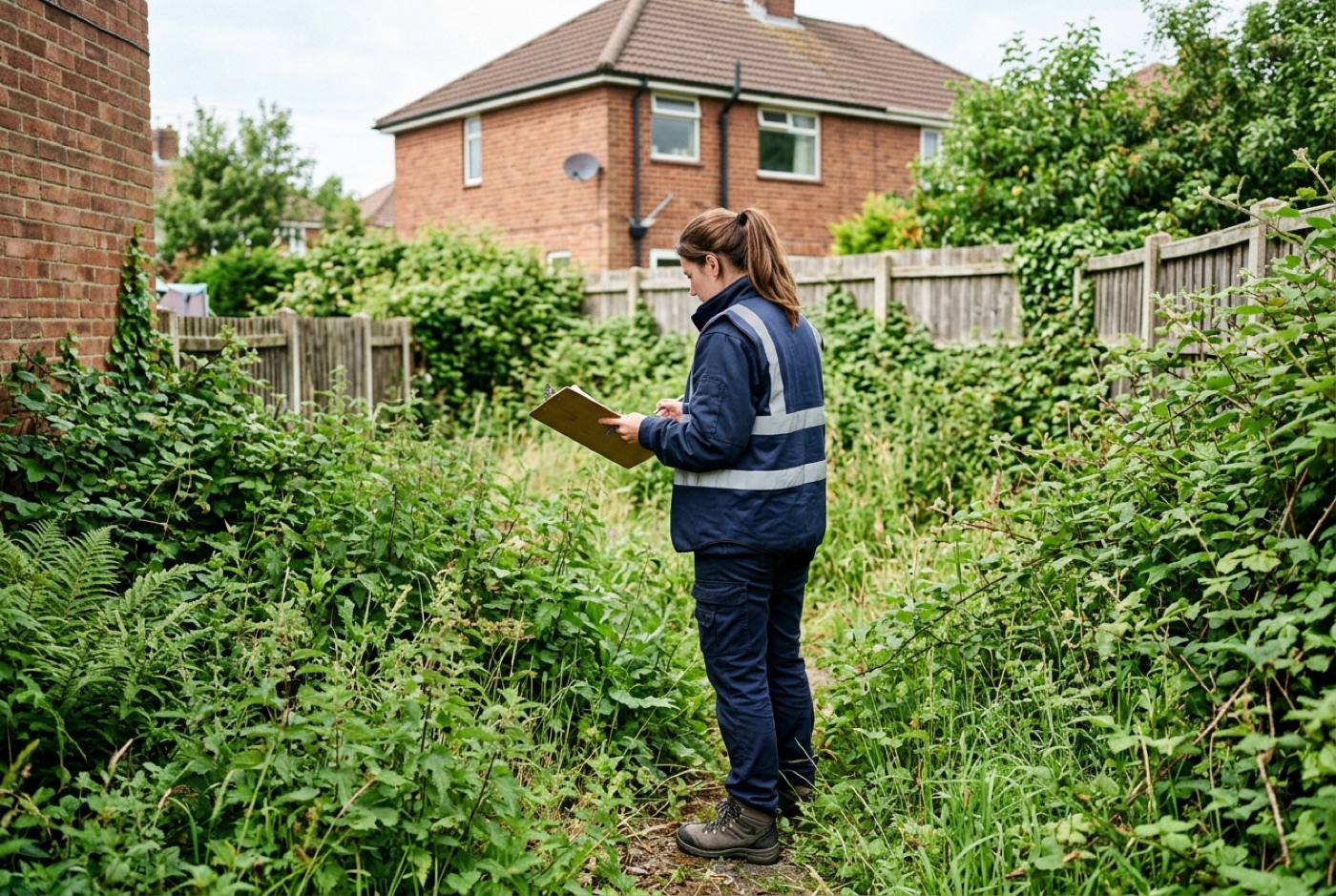
A knotweed specialist accredited by the PCA (Property Care Association) surveys the site, confirms whether it is Japanese knotweed, maps the extent and assesses the risk to the property and neighbours.
If treatment is needed, the specialist sets out a Knotweed Management Plan (KMP), which is the documented programme of control, and arranges an Insurance-Backed Guarantee (IBG) that stands behind the work even if the contractor ceases trading.
It is this package, the survey, the KMP and the IBG, that lenders typically rely on, which is why a credible, accredited specialist matters more than a cheap one-off spray.
Cost
- Knotweed survey
- Get a quote A PCA-accredited survey confirming whether it is knotweed and the extent.
- Management plan and treatment
- Get a quote A documented Knotweed Management Plan (KMP) of control over time.
- Insurance-Backed Guarantee (IBG)
- Get a quote The guarantee lenders typically want behind the treatment.
Cost depends on the extent and the treatment plan, so there is no single figure. The point for a mortgage is not the cheapest spray but a survey, KMP and IBG from an accredited specialist that a lender will accept.
Who it is for
- Homeowners selling or remortgaging where Japanese knotweed has been found on or near the property.
- Buyers whose surveyor or lender has flagged knotweed and asked for a management plan and guarantee.
- Anyone whose mortgage offer is conditional on knotweed being professionally surveyed and managed.
The mortgage and sale angle
- Where knotweed is close enough to damage buildings or restrict use of the garden (RICS management categories A and B), most lenders will want a specialist inspection, a Knotweed Management Plan and an Insurance-Backed Guarantee before they lend. For lower-risk cases (category C), RICS says lenders ought not to require treatment as a condition of the mortgage (guidance from RICS, the Royal Institution of Chartered Surveyors, and the PCA on knotweed and lending).
- This makes it a hard transaction blocker: without the right documents the mortgage, and so the sale, can collapse.
- An accredited specialist who produces a survey, KMP and IBG that lenders accept is what turns a stalled transaction back into a completable one.
How to choose a specialist
- Use a Property Care Association (PCA) accredited knotweed specialist, since RICS guidance says lenders expect a specialist who is a member of a recognised trade body, and the PCA is the main one for knotweed.
- Confirm the specialist can provide a Knotweed Management Plan and an Insurance-Backed Guarantee, not just a one-off treatment.
- Check the documents will be accepted by your lender, and get the plan and guarantee terms in writing.
Frequently asked questions
Do I need a knotweed survey to get a mortgage?
Where Japanese knotweed is present or suspected, many lenders require a professional survey before lending, and often a Knotweed Management Plan and an Insurance-Backed Guarantee as well. A PCA-accredited specialist can produce the documents lenders accept.
What are a KMP and an IBG?
A Knotweed Management Plan (KMP) is the documented programme for controlling the knotweed over time. An Insurance-Backed Guarantee (IBG) is insurance that stands behind that treatment even if the contractor stops trading. Lenders typically want both before they will lend.
Where do I read about identifying knotweed?
This page is about the survey, management plan and guarantee a lender needs, and finding a PCA-accredited specialist.
Sources
Keep reading
Related on VettedHome
- The RICS category system explained (A, B, C, D)
- Spray foam removal cost
- Open-cell vs closed-cell spray foam
- Spray foam removal process
- Dry rot treatment
- Septic tank replacement checklist
- Woodworm and dry rot treatment guarantee
- Does my flat actually need an EWS1?
- Questions to ask before you pay for a survey or removal
- Selling a house with a septic tank
- Selling a house with damp

Editor, VettedHome
Adam leads VettedHome's editorial coverage of UK home services. He is the founder and managing director of Muswell Rose, the commercial strategy and modern systems business behind a portfolio of UK information sites, and he researches and writes the plain-English guides that help homeowners choose between installers and trades, drawing on the standards set by the relevant bodies for each job, such as Gas Safe Register, NICEIC, MCS, TrustMark and the Property Care Association. He is clear about what to check before any work starts.
AI-assisted check
Get help
What’s happening with the knotweed?
Tell us what’s happening and we’ll get back to you with the next step. Free to use.
- A survey or lender flagged itOften during a sale or remortgage
- I think I’ve seen itIn the garden or next door
- I need it treatedYou know it is there
- I’m not sure what I needWe’ll help you work it out
Free to use · Nobody pays to be listed · We tell you who gets your details